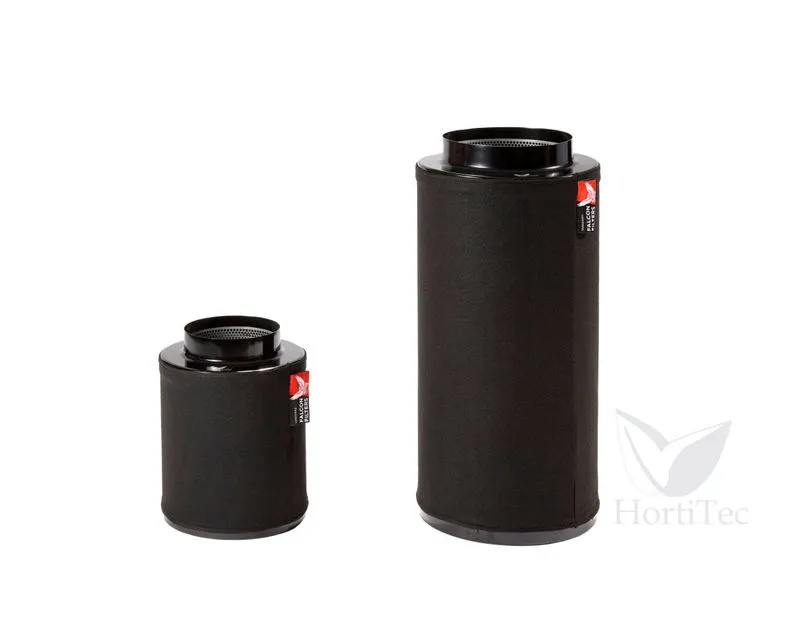
Activated carbon filter designed to reduce odors along an extraction line in indoor growing systems. It integrates into a ventilation system with ducts and an extractor fan, helping keep outgoing air cleaner from odors.
Key features
- Use: suitable for odor treatment in indoor extraction systems.
- Installation: inline installation between extractor fan and ducting (or in equivalent system configurations).
- Size/series: identified as the “100/200” variant of the Falcon line.
What it is and what it is for
An activated carbon odor filter is a component installed in the ventilation system to reduce odors conveyed outdoors. It is typically used in grow boxes and technical rooms where continuous extraction is part of climate control.
How to use
It is used as part of the extraction line: air passes through the filter and is then evacuated by the extractor fan. Performance depends on the overall system (extractor fan, ducting, pressure losses, maintenance).
Installation
In general:
- place the filter in a section that is accessible for maintenance;
- connect the filter to the ducts with suitable connectors/clamps;
- check the tightness of the joints to avoid leaks of unfiltered air.
Maintenance
To maintain consistent performance, periodically check the condition of the filter and plan replacement when adsorption capacity is reduced. If external elements are present (e.g. “pre-filter”), clean/replace them as needed.
Technical specifications
- Type: activated carbon filter (odor control)
- Line/Model: Falcon 100/200
Brand
VANGUARD HYDROPONICS.
FAQ
Does this filter replace the extractor fan?
No: it is a passive component that works together with the extractor fan and ducting.
Where should it be installed?
In a position that is easy to inspect and maintain, avoiding tight bends immediately upstream/downstream where possible.
When should it be replaced?
When odor reduction is no longer adequate or according to your system’s and the manufacturer/retailer’s usual practice.